


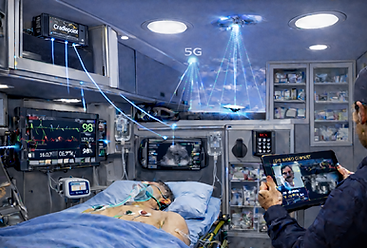
AMBULANCES ARE MOBILE NETWORKS CONNECTED TO CRITICAL INFRASTRUCTURE
Devices in the Field | Systems Behind the Scenes | What Breaks First |
|---|---|---|
-
ePCR tablets
-
Cardiac monitors
-
Phones, hotspots, radios
-
CAD
-
Pulsara
-
ImageTrend / ESO
-
Microsoft 365
-
Delayed documentation
-
Lost telemetry
-
HIPAA exposure
-
Public records risk
WHY THIS MATTERS TO YOU
EMS Chiefs & Directors
Cyber incidents directly affect response readiness, crew efficiency, and patient care. Locked tablets, system outages, or vendor disruptions don’t stay in IT—they show up on the street.
We help Chiefs:
-
Understand how cyber risk impacts operations and response time
-
Identify weak points in field devices and workflows
-
Prepare leadership and crews before an incident forces reactive decisions
Outcome: Operational continuity, fewer surprises, and defensible leadership decisions.
ESD Commissioners & Governing Boards
Cybersecurity is now a governance and liability issue, not just a technical one. Commissioners are increasingly expected to demonstrate reasonable oversight of cyber risk affecting public safety operations.
We help Boards:
-
Translate cyber risk into liability, funding, and operational exposure
-
Understand where oversight is required—and where it isn’t
-
Ask the right questions without needing technical expertise
Outcome: Clear oversight, reduced liability exposure, and documented due diligence.
County & Municipal Leadership
A cyber incident in EMS doesn’t stay contained—it impacts 911 response, interagency coordination, public trust, and continuity of essential services.
We help County and City leadership:
-
Understand EMS cyber risk as part of community resilience
-
Identify interdependencies between EMS, dispatch, vendors, and IT
-
Plan for continuity when systems are disrupted
Outcome: Stronger emergency response capability and fewer cascading failures during incidents.
EMS IT & Compliance Leads
Technical controls only work if they align with how EMS actually operates. Field realities, vendor dependencies, and staffing constraints require practical—not theoretical—security approaches.
We help IT and compliance teams:
-
Align security controls with real-world EMS workflows
-
Bridge the gap between technical requirements and leadership expectations
-
Support HIPAA, vendor risk, and documentation needs without slowing operations
Outcome: Security that works in the field and stands up to leadership and regulatory scrutiny.
Different roles see cyber risk differently.
EMSCyber360 connects those perspectives—before an incident forces the conversation.
OPERATIONAL RISK PROTECTION SERVICES FOR EMS
EMSCyber360 focuses on cyber risk that directly impacts EMS operations.
Operational and HIPAA Security Risk Assessments for EMS
Identifies technology-related risks that could disrupt EMS operations, compromise patient data,
or trigger regulatory action and prioritizes them based on operational impact.
Incident Readiness & Operational Response Planning
Prepares leadership and operations to manage technology-related incidents as operational
events with clear roles and decision paths.
Mobile & Medical Device Risk Protection
Reduces operational and compliance risk from tablets, phones, monitors, and connected
medical devices used in mobile, shared, and high-pressure EMS environments.
Threat Awareness & Early Warning for EMS
Provides leadership with early visibility into emerging digital and operational threats
targeting EMS agencies so preparation occurs before disruption.
Workforce Risk Reduction & Awareness Training
Reduces operational risk caused by human error through EMS-specific, scenario-based training.
AI Risk & Governance Support for EMS
Helps EMS leadership understand and manage operational risks introduced by
AI-enabled systems already in use.
OUR EMS-FOCUSED CYBERSECURITY SERVICES


Identifies where your EMS agency is exposed before a cyber incident disrupts operations or triggers regulatory action.
Prepares leadership and operations to respond quickly and effectively when a cyber incident occurs.
Reduces patient data exposure and operational risk from tablets, phones, monitors, and connected medical devices used in the field.
Provides early warning of cyber threats targeting EMS agencies so leadership can prepare before incidents occur.
Reduces human-error risk by training EMS personnel on real-world cyber threats they encounter on shift.
Guides responsible use of AI tools to improve EMS operations without introducing unmanaged compliance or governance risk.

